
Dog Grooming Guide: How to Groom Your Dog at Home
Our Siberian Husky has a complicated relationship with grooming. She loves being brushed — genuinely leans into it, closes her eyes, acts like she’s at a spa. But try to touch her nails? Suddenly she’s a dramatic actress in a tragedy, pulling her paw away like we’ve personally betrayed her. Every dog has their thing. Yours might hate baths. Or ear cleaning. Or the sound of clippers. The good news: home grooming is a skill, not a talent. Anyone can learn it.
This guide covers how to groom your dog at home — from brushing and bathing to nail trims and ear cleaning. We’ll go step by step, with practical tips for dogs who cooperate and honest advice for dogs who don’t. By the end, you’ll know what tools you need, how often to do each task, and when to call a professional instead. Let’s make grooming less of a wrestling match and more of a bonding session. Or at least, less of a wrestling match.
Quick Comparison: Home Grooming Tasks at a Glance
| Task | How Often | Key Tools | Difficulty |
|---|---|---|---|
| Brushing | Weekly (daily for long coats) | Slicker brush, metal comb | Easy |
| Bathing | Every 4–12 weeks | Dog shampoo, non-slip mat, towels | Moderate |
| Nail Trimming | Every 3–4 weeks | Clippers or grinder, styptic powder | Moderate–Hard |
| Ear Cleaning | Check weekly, clean as needed | Ear cleaner, cotton balls | Easy |
| Teeth Brushing | Daily (or 2–3x weekly) | Dog toothbrush, enzymatic toothpaste | Moderate |
| Eye Care | Daily check | Warm cloth, saline | Easy |
1. Brushing Your Dog (The Foundation of Everything)
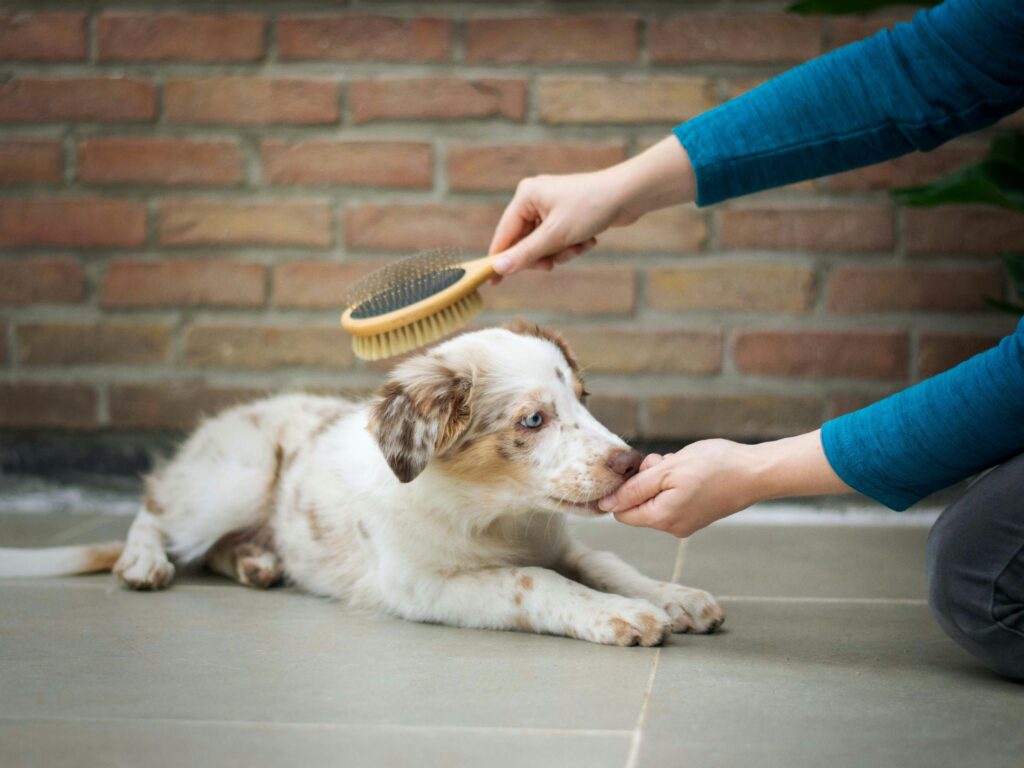
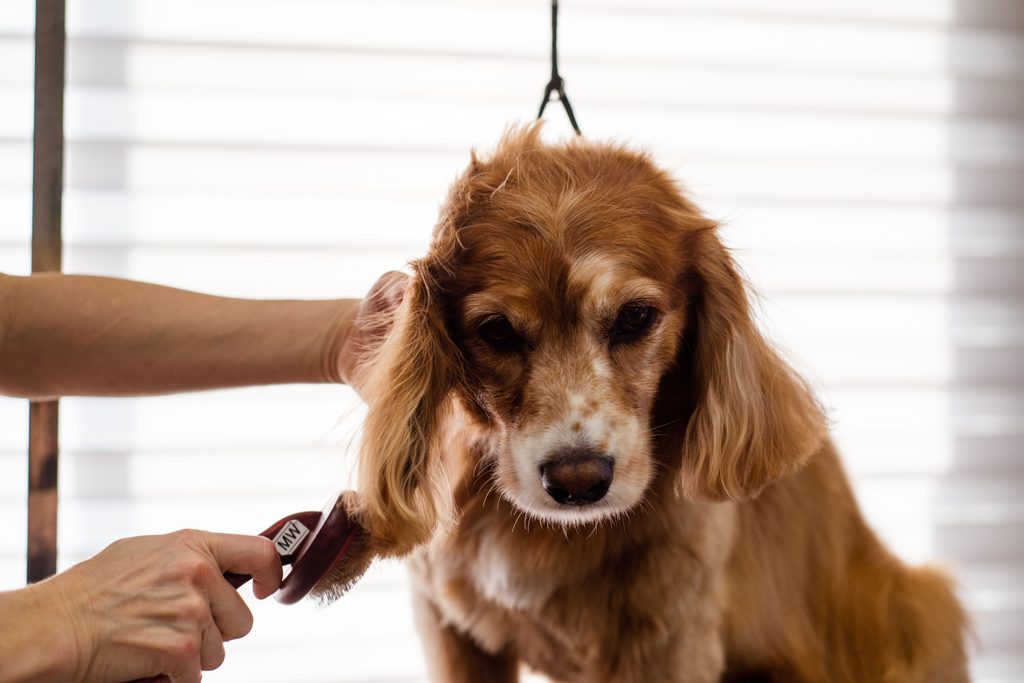
Brushing isn’t just about keeping your dog looking pretty. It removes dirt and loose hair, distributes natural oils, prevents mats, and gives you a chance to check for skin issues, lumps, or parasites . Think of it as a full-body health inspection disguised as pampering.
The right brush matters. Using the wrong one is like brushing your own hair with a fork — technically possible, deeply unhelpful.
- Short coats (Beagles, Boxers, Labs): Use a bristle brush or rubber curry comb to remove loose hair and add shine .
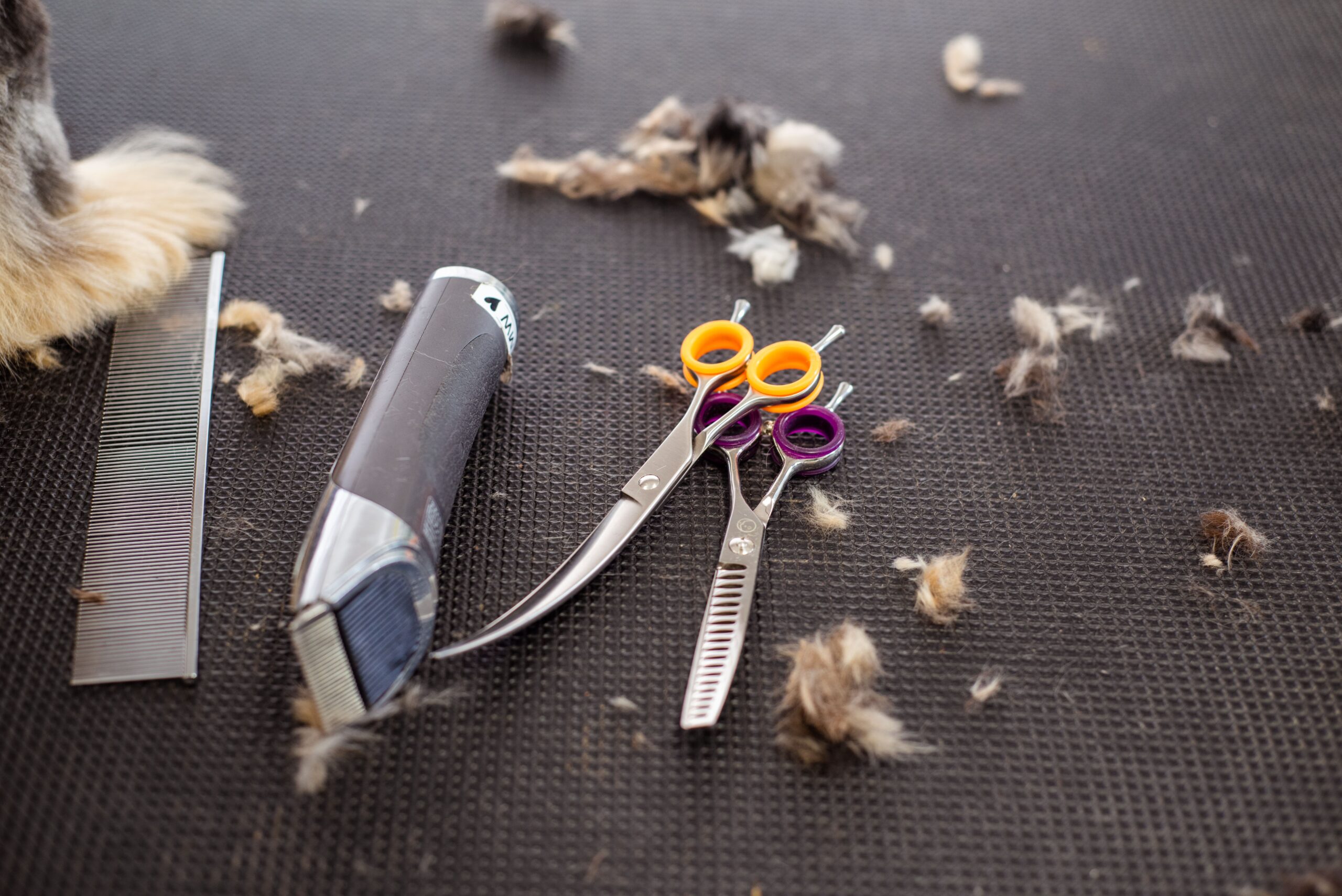
- Medium and long coats (Golden Retrievers, Border Collies, Huskies): Use a slicker brush to reach through the coat and detangle, followed by a metal comb to check your work .
- Curly coats (Poodles, Doodles): Brush daily with a slicker brush and metal comb. These coats mat fast — if you can’t get a comb through it, neither can air .
How to brush properly: Work in the direction of hair growth, but make sure you’re reaching the skin, not just skimming the surface . For double-coated breeds like Huskies, the goal is removing that dense undercoat. If you’re just brushing the top layer, you’re basically decorating the problem .
Pro tip for double coats: Never shave them. The double coat regulates temperature in both directions — it keeps them cool in summer and warm in winter. Shaving can damage the coat and increase the risk of sunburn and skin issues . Brush instead. And invest in a good vacuum. Trust us.
2. Bathing Your Dog (Without the Chaos)
Some dogs love baths. Ours acts like we’re committing a crime against her. Either way, preparation is everything.
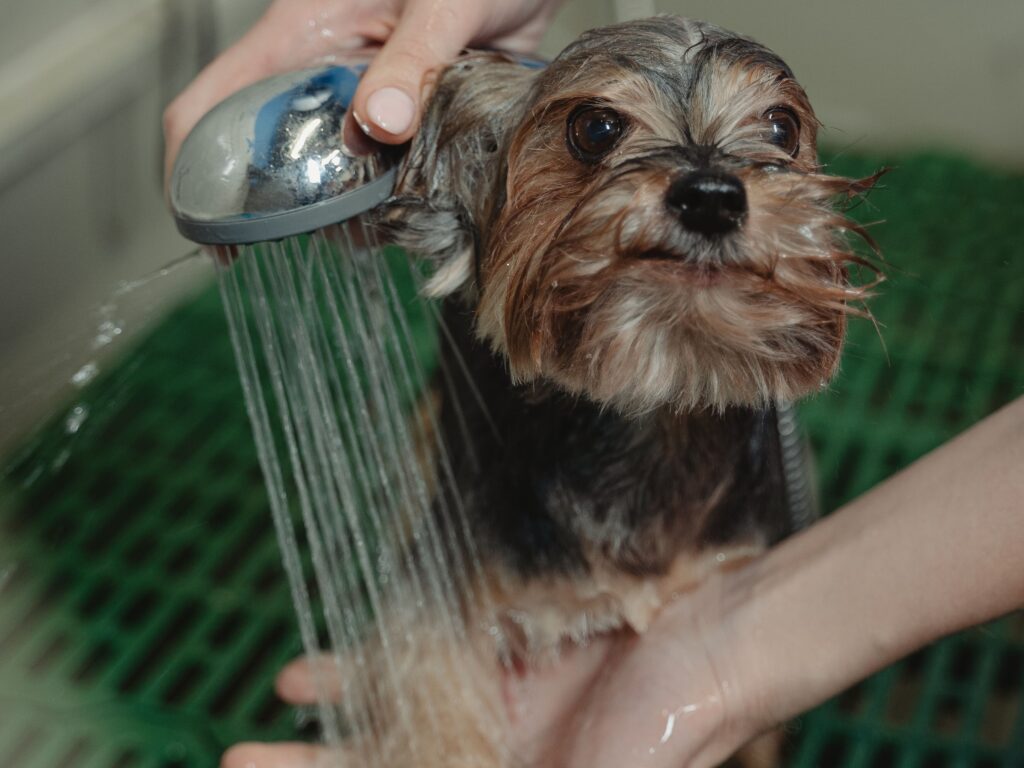
How often should you bathe? Most dogs do well with a bath every 4–12 weeks, depending on coat type, activity level, and how much they enjoy rolling in questionable substances . Bathing too often strips natural oils and can cause dry, itchy skin .
Before the bath: Brush your dog first. This removes loose hair and prevents mats from tightening when wet . Mats plus water equals concrete. Not fun for anyone.
The bath itself:
- Use lukewarm water — not hot, not cold .
- Apply dog-specific shampoo, working from the neck down. Avoid the face (we’ll get to that) .
- Massage it in, then let it sit for about five minutes for maximum effect .
- Rinse thoroughly. Rinse again. When you think you’re done, rinse one more time. Leftover shampoo causes irritation .
The face: Use a damp washcloth with a tiny bit of shampoo. Wipe gently, avoiding eyes and ears. Rinse with a clean damp cloth .
Drying: Towel dry first, then use a blow dryer on a cool or warm setting if your dog tolerates it. For double-coated breeds, thorough drying is important to prevent skin issues under that dense coat .
If your dog hates baths: Use a lick mat smeared with peanut butter or soft treats. Have a second person help if possible. Keep the water low-pressure. And speak in a calm, soothing voice — your dog takes cues from you .
3. Trimming Your Dog’s Nails (The Final Boss)
Let’s be honest: nail trims are the hardest part of home grooming for most people. But overgrown nails aren’t just ugly — they can affect your dog’s gait, cause pain, and even lead to infections .
How often? Every 3–4 weeks for most dogs. If you hear clicking on hard floors, they’re overdue .
Tools:
- Scissor clippers: Good for small dogs and puppies .
- Plier-style clippers: Better for larger dogs with thicker nails .
- Nail grinder: A filing tool that’s great for black nails (where the quick is hard to see) and anxious dogs who dislike the “snip” sound .
The quick: This is the pink area inside the nail containing blood vessels and nerves. On white nails, you can see it. On black nails, you can’t. Clip only the hook-like tip that curves downward. Take tiny bits at a time .
If you cut the quick: It happens. Stay calm. Apply styptic powder to stop the bleeding. Your dog will forgive you. Probably .
Making it easier: Touch your dog’s paws regularly outside of grooming sessions. Let them sniff the clippers. Give treats for calm behavior. For anxious dogs, try trimming one or two nails per day instead of all at once .

4. Cleaning Your Dog’s Ears (Gentle and Quick)
Most healthy dogs don’t need frequent ear cleaning. A weekly check is enough for most, with actual cleaning only when needed . Dogs with floppy ears (Cocker Spaniels, Basset Hounds) or hairy ear canals (Poodles, Schnauzers) may need more frequent attention .
What you need: Vet-approved ear cleaner, cotton balls or gauze. Never use cotton swabs — they can push debris deeper .
How to clean: Squeeze a small amount of cleaner into the ear canal, massage the base of the ear gently, then wipe the outer ear with a cotton ball. Let your dog shake their head to expel excess .
When to call the vet: Redness, swelling, discharge, bad odor, or if your dog yelps when you touch their ear. These are signs of infection, not something to treat at home .

5. Brushing Your Dog’s Teeth (Yes, It Matters)
Dental disease affects most dogs by age three. Brushing is the best prevention, and it’s easier than it sounds if you start gradually .
How often? Ideally daily. A few times a week is still better than nothing .
What you need: Dog toothbrush (finger brush works for beginners) and enzymatic dog toothpaste. Never use human toothpaste — xylitol is toxic to dogs .
How to start: Let your dog lick the toothpaste first. Then touch it to their teeth. Then brush a few teeth. Gradually work up to a full brushing session. Keep it short, positive, and treat-heavy .

6. Eye Care (Simple but Important)
Check your dog’s eyes daily for discharge, redness, or irritation. Wipe away discharge with a warm, damp cloth. If you notice persistent redness, swelling, or colored discharge, see your vet .
Home Grooming Checklist
| Task | Frequency | Quick Tip |
|---|---|---|
| Brush coat | Weekly–daily (by coat type) | Reach the skin, not just the surface |
| Bath | Every 4–12 weeks | Brush before, rinse thoroughly after |
| Trim nails | Every 3–4 weeks | Tiny bits, styptic powder ready |
| Clean ears | Weekly check | Only clean when dirty |
| Brush teeth | Daily–2x weekly | Enzymatic toothpaste only |
| Check eyes | Daily | Warm cloth for discharge |
FAQ
Can I use human shampoo on my dog?
No. Dog skin has a different pH than human skin. Human shampoo can dry out their coat and cause irritation. Always use dog-specific shampoo .
My dog hates having their nails trimmed. What can I do?
Start slow. Touch their paws regularly, introduce the clippers gradually, and reward calm behavior. Try a nail grinder if the “snip” sound scares them. If it’s still too stressful, a professional groomer or vet can do it — and there’s no shame in that .
How do I know if my dog needs a professional groomer?
If your dog has severe mats, is extremely anxious or aggressive during grooming, or has a coat type that needs specialized cutting (Poodles, Doodles), a professional is the safer choice. Also, if you’re ever unsure about what you’re doing, ask for help .
Should I shave my double-coated dog in summer?
No. Double coats insulate against heat and cold. Shaving can damage the coat and increase the risk of sunburn and skin problems. Brush instead to remove loose undercoat .
Conclusion: Start Small, Stay Consistent
Home grooming doesn’t have to be perfect. It has to be consistent. A few minutes of brushing each week, a bath every month or two, and regular nail checks will keep your dog comfortable and healthy between professional visits.
If you’re new to this, start with brushing. It’s the easiest task, the most bonding-friendly, and the foundation for everything else. Your dog gets used to being handled, you get practice reading their comfort level, and you both build trust. From there, add nail trims and baths when you’re ready.
And if your dog is like ours — dramatic about nails, relaxed about everything else — you’ll learn to work with their quirks. Grooming isn’t about winning a fight. It’s about finding a rhythm that works for both of you. Some days that rhythm involves treats and patience. Some days it involves calling a professional. Both are valid.
Affiliate note: WonderNest may earn a commission from qualifying purchases made through affiliate links, at no additional cost to the reader.